

How to Start Moving When You Don’t See the Whole Staircase
How to Start Moving When You Don’t See the Whole Staircase
We often wait for a “lightning bolt” of inspiration to change our lives, but real transformation is usually much quieter. It’s a process of trial, error, and constant growth. I’m not a psychologist, but I am someone who has walked the path of major life changes—and I’m still walking it.
If I can navigate this shift, you can too. Here is a four-step framework to help you assess your current season and plan for the next.
1. Conduct an Honest Audit
Before you can move forward, you have to know exactly where you’re standing. Think of this as a personal inventory. Ask yourself:
-
What is my current baseline? What do I love about my life right now, and what feels like a “dislike” that I’m ready to leave behind?
-
What is the destination? Define where you want to go and set a realistic (but flexible) timeline.
-
What is in my “toolbelt”? Identify the skills you already possess and, more importantly, the ones you need to acquire to reach your goal.
According to the Stages of Change Model, most people fail because they try to “Act” before they have finished “Contemplating.” Taking this assessment moves you from simply thinking about a problem to being prepared for a solution.
2. Anchor Your “Why”
Change is difficult, and when things get tough, “because I should” isn’t a strong enough motivator. You need to know how important these changes are to you on a visceral level.
Research into social motivators, such as the SCARF model, suggests that our brains are more likely to commit to change when we understand how it impacts our autonomy and certainty. If your “why” is rooted in your core values, you’re much more likely to sustain the effort over the long haul.
3. Build a Living Plan
A plan isn’t a rigid contract; it’s a compass. You need a roadmap to get started, but you must be willing to adjust the route when you hit a detour.
-
Be Prepared to Pivot: If a specific method isn’t working, change the method, not the goal.
-
Iterate: High-level personal growth often requires an iterative mindset where you treat failures as data points rather than defeats.
4. Start Small with What You Have
You don’t need a perfect setup to begin. The most effective way to create lasting change is through “micro-actions.”
-
What can you do NOW? Look at the resources currently at your disposal.
-
The Power of Small Wins: Identify the tiny habits you can implement today that point you in the right direction.
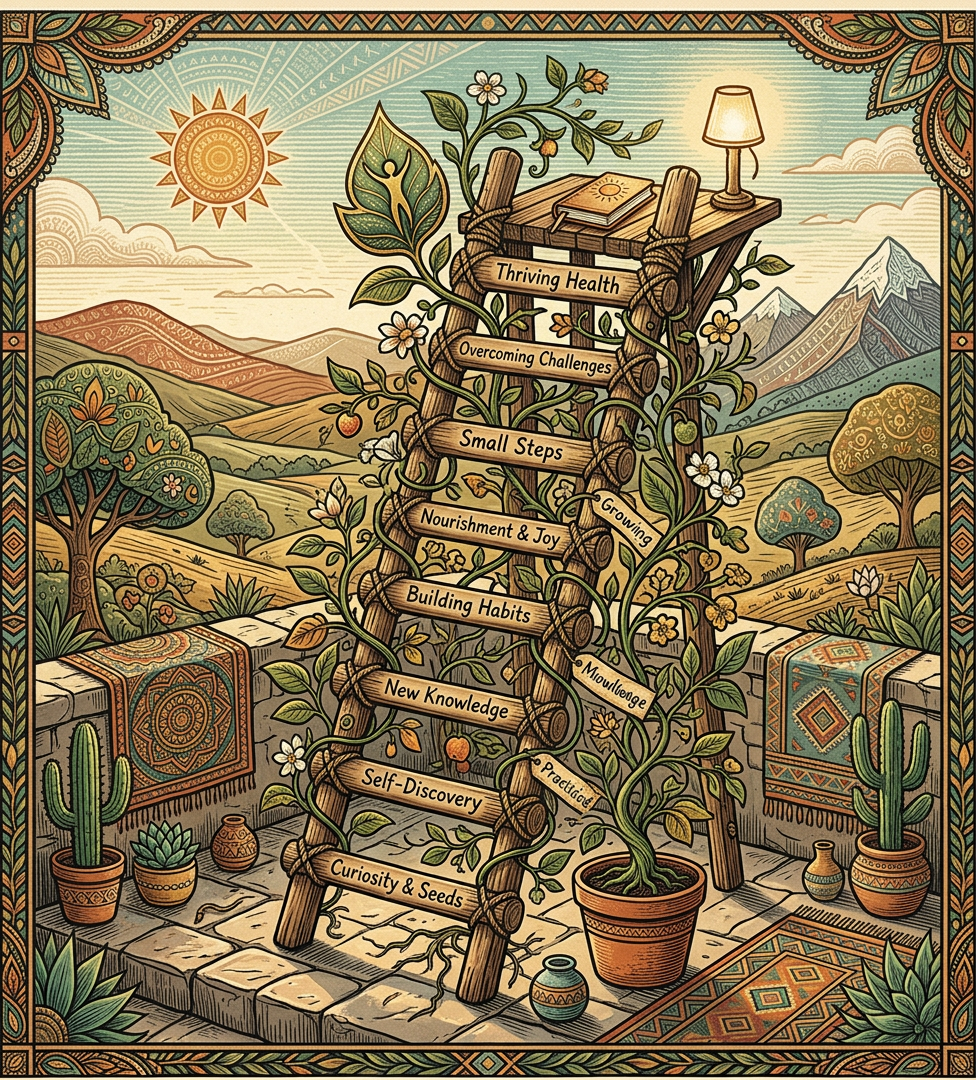
Then, simply get started. You don’t have to see the whole staircase to take the first step.
References
Bobinet, K. (2025). Personal growth and wellbeing: An iterative mindset. National Institutes of Health. https://pmc.ncbi.nlm.nih.gov/articles/PMC12292803/
McGowan, C. (2023). Understanding your ability to change: A self-assessment. PositivePsychology.com. https://positivepsychology.com/readiness-for-change/
University of Michigan. (2026). Self-assessment tools and readiness for change. Human Resources Career Development Toolkit. https://hr.umich.edu/career-development-toolkit/self-assessments-readiness-change
What’s the first small “micro-action” you’re planning to take this week?
Related Posts








Sign up with your email for our monthly newsletter with great information and resources to help make your lives a little easier.