
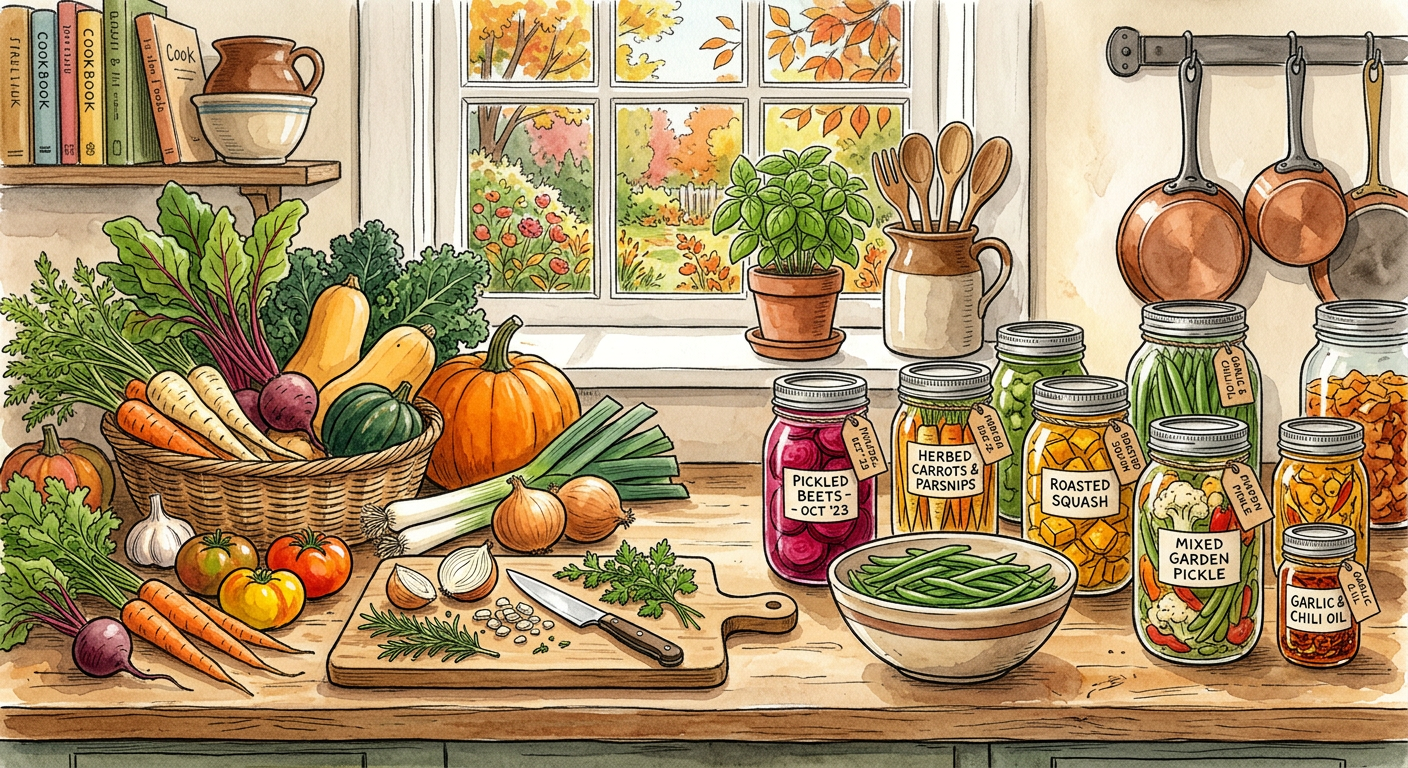
Seasonal Sourcing and Food Storage
Seasonal Sourcing and Food Storage: A Guide to Flavor and Resilience
Sourcing ingredients according to their natural harvest cycles is more than a culinary trend; it is a strategic approach to maximizing flavor, nutritional density, and economic value. By aligning consumption with peak ripeness, individuals can access foods that are inherently superior in quality compared to those shipped long distances out of season. This guide explores the benefits of seasonal sourcing and the preservation techniques required to maintain that bounty throughout the year.
The Benefits of Seasonal Sourcing
Eating seasonally offers a range of advantages that impact both personal health and environmental sustainability:
-
- Nutritional Superiority: Fruits and vegetables harvested at peak ripeness contain higher concentrations of vitamins, minerals, and antioxidants. For example, leafy greens can lose nearly 50% of their Vitamin C content during extended transport and storage.
- Economic Savings: When crops are in season, high supply typically leads to lower consumer prices. Purchasing in bulk during these periods is one of the most effective strategies for reducing overall grocery costs.
- Environmental Impact: Seasonal eating reduces “food miles,” thereby lowering the greenhouse gas emissions associated with long-distance transportation and intensive refrigeration.
- Flavor and Variety: Naturally ripened produce develops more complex sugars and textures. Furthermore, rotating diets with the seasons encourages a more diverse intake of nutrients throughout the year.
Strategies for Long-Term Food Storage
To extend the benefits of seasonal harvests into the “off-season,” various preservation and storage methods can be employed:
-
- Freezing: This method uses minimal specialized equipment and effectively preserves fresh flavors and textures by slowing microbial and enzymatic activity.
- Canning: Water bath canning is ideal for high-acid foods like fruits and pickles, while pressure canning is required for low-acid items such as meats and most vegetables.
- Dehydrating: By removing moisture, dehydration inhibits the growth of bacteria and mold, creating lightweight, shelf-stable options for fruits, vegetables, and herbs.
- Cool Storage: Traditional methods like root cellars or unheated basements utilize cool, dark, and dry conditions (ideally between 50°F and 70°F) to keep root vegetables and apples fresh for months.
- Commercial Solutions: For extended emergency preparedness, professional freeze-dried kits can offer a shelf life of 25 years or more while retaining significant nutritional value.
Best Practices for Storage Safety
Regardless of the method, certain environmental factors must be managed to prevent spoilage:
-
- Temperature & Humidity: Most stored foods maintain quality best in cool (50°F–70°F) and dry environments; high moisture can lead to mold.
- Airtight Packaging: Using Mylar bags with oxygen absorbers, glass jars, or food-grade buckets protects food from oxidation and pests.
- FIFO Method: Implement a “First In, First Out” (FIFO) rotation system to ensure older stock is consumed before it passes its optimal quality date.
References
American International Foods. (2026, February 25). 2026 Food & beverage trends | Trend predictions. https://www.americaninternationalfoods.com/2026/02/25/2026-food-beverage-trends/
Battlbox. (n.d.). What foods to store for long term survival. https://www.battlbox.com/blogs/outdoors/what-foods-to-store-for-long-term-survival
Clean Eatz Kitchen. (2026, January 5). Benefits of eating seasonal produce (2026). https://www.cleaneatzkitchen.com/a/blog/the-benefits-of-eating-seasonal-product
Common Sense Home. (2026, March 8). Long shelf life foods + storage tips & printable chart. https://commonsensehome.com/long-shelf-life-foods/
Lay It Flat. (2026, January 12). The 2026 beginner’s guide to food preservation. https://layitflat.com/blogs/news/the-2026-beginners-guide-to-food-preservation-master-canning-and-dehydrating-with-these-5-essential-books
MasterClass. (2021, July 29). A guide to home food preservation: How to pickle, can, ferment, dry, and preserve at home. https://www.masterclass.com/articles/a-guide-to-home-food-preservation-how-to-pickle-can-ferment-dry-and-preserve-at-home
Meraki Juice Kitchen. (2025, March 26). Eating seasonally: Health and environmental benefits. https://merakijuicekitchen.com/2025/03/26/eating-seasonally-health-and-environmental-benefits/
National Breast Cancer Foundation. (2023, March 21). 4 reasons to eat seasonally this spring. https://www.nationalbreastcancer.org/blog/4-reasons-to-eat-seasonally-this-spring/
University of Maryland Medical System. (2022, April 4). The benefits of seasonal eating. https://health.umms.org/primary-care/seasonal-eating/
Related Posts

Sign up with your email for our monthly newsletter with great information and resources to help make your lives a little easier.